'국제 분쟁·갈등과 청년들의 삶'과 '평화를 일구는 청년들의 연대'라는 주제로 개최된 [청년·전문가 평화 ROUND TABLE
]에서 발표된 팔레스타인 청년 예술가 리나 카팁(Rena Khatib) 의 원고. "팔레스타인 여성들의 예술, 저항, 그리고 집단적 서사
- 세대를 넘어 기억, 정체성, 희망을 탐구하다"
[청년·전문가 평화 ROUND TABLE] 는 분쟁과 갈등이 청년들의 삶에 미치는 영향을 알아보고 이를 극복하기 위한 국제사회 청년들의 협력 방안을 모색하기 위한 자리로 고양YMCA 호크마미래사회연구소, 아시아의친구들, 희망의소리, 아시아태평YMCA연맹 등이 협력하여 2025년 9월 17일(수) 14:00~18:00, 킨텍스 제2전시장 307호에서 개최되었다.

저항은 희망을 낳는다
: 팔레스타인 여성들의 예술, 저항, 그리고 집단적 서사
- 세대를 넘어 기억, 정체성, 희망을 탐구하다
리나 카팁(Rena Khatib) • 팔레스타인 청년 예술가
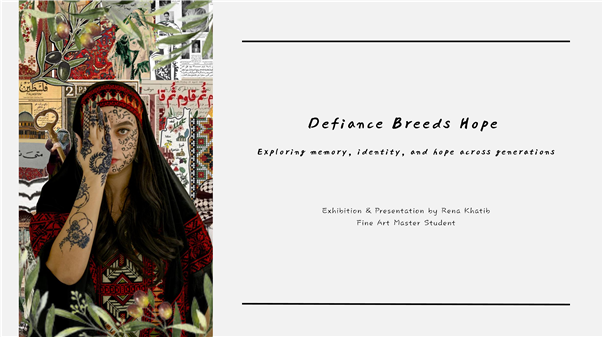
안녕하세요, 저는 레나 카티브입니다. 오늘 이 자리에서 예술을 통해 희망과 저항에 대해 이야기할 수 있어 큰 영광입니다.
우리가 국제 분쟁을 떠올릴 때 보통은 통계, 정치, 폭력 같은 것들을 먼저 생각합니다. 그러나 그 이면에는 실제로 살아가는 사람들이 있습니다. 특히 청년들과 여성들은 끊임없이 살아남고, 저항하며, 희망을 만들어 나가고 있습니다.
팔레스타인에서 여성들은 늘 삶과 존엄을 지키기 위한 투쟁의 최전선에 서 있었습니다. 그들은 단순히 어머니나 돌봄 제공자에 머물지 않고, 농부이자 교육자, 자유투사이자 문화의 수호자였습니다. 1948년 나크바(대재앙) 당시, 70만 명이 넘는 팔레스타인 사람들이 쫓겨났을 때 여성들은 집의 열쇠를 품에 안고, 드레스에 이야기를 수놓으며, 구전으로 기억을 이어갔습니다. 이 작은 행위들 하나하나가 바로 저항이었습니다. 정체성이 지워지지 않도록, 희망이 다음 세대에 전해지도록 만든 것입니다.
저 같은 젊은 팔레스타인인에게 이 역사는 단순히 과거가 아니라 살아 있는 유산입니다. 그리고 저는 예술이야말로 이 유산을 이어갈 수 있는 가장 강력한 수단이라고 믿습니다. 예술은 기억이고, 저항이며, 세대를 잇고 억압 너머를 상상하게 만드는 힘입니다.
전시: 저항은 희망을 낳는다

이번 전시는 팔레스타인 여성들에게 바치는 것입니다. 기억, 정체성, 희망을 엮어내며 과거를 보존하는 데 그치지 않고 새로운 세대가 저항과 창조를 이어가도록 영감을 주고자 했습니다.
땅의 여인 (Lady of the Land)
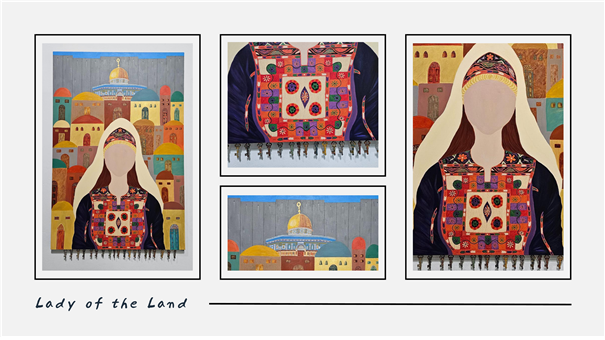
전시의 중심 작품 중 하나는 땅의 여인이라는 그림입니다. 그녀는 베들레헴 전통 자수 드레스(토브)를 입고 있지만 얼굴은 없습니다. 이는 의도적인 표현입니다. 그녀는 특정한 한 사람이 아니라 모든 여성을 상징합니다. 어머니, 할머니, 딸, 자매 — 세대를 넘어 기억을 이어온 이들을 모두 담고 있습니다.
얼굴 없는 그녀는 또한 역사 속에서 이름조차 남지 못했지만 생존과 전통을 지탱해온 수많은 여성들을 대변합니다. 그녀는 나크바의 슬픔을 짊어진 동시에, 전통을 지키고 계승하는 빛나는 존재이기도 합니다.
팔레스타인 여성들은 자수를 살아 있는 기록으로 사용했습니다. 문양과 색을 통해 각 도시와 마을의 꽃, 동물, 풍경을 담아냈습니다. 한 땀 한 땀이 곧 지리이자 이야기이며 기억입니다. 토브를 입는 행위 자체가 정체성 지우기에 맞서는 저항이 됩니다.
그녀의 뒤에는 나크바 당시 가족들이 쫓겨난 옛집들을 그려 넣었습니다. 말없이 서 있는 증인처럼. 캔버스 아래에는 열쇠들이 매달려 있습니다. 빼앗긴 집의 열쇠들, 오늘날까지 여성들이 간직하고 있는 열쇠들입니다. 그것은 단순한 물건이 아니라 언젠가 다시 문을 열겠다는 약속의 상징입니다.
페르소나의 베일 (Veils of Personas)

많은 이들이 “왜 얼굴이 없나요? 행복한가요, 슬픈가요, 화난 건가요?”라고 물었습니다. 이 질문이 저에게 ‘가면’을 떠올리게 했습니다. 여성들은 왜 얼굴을 가리거나 정체성을 숨겨야 할까요?
팔레스타인 여성 활동가들에게 가면은 생존의 수단이기도 합니다.
그러나 가면은 비유적 의미도 있습니다. 사회의 기대에 맞추기 위해, 문화 속에서 살아남기 위해, 혹은 적을 위협하기 위해서도 여성들은 가면을 씁니다.
저는 자수 문양을 그려 넣은 가면, 짐과 강인함을 상징하는 시멘트 가면, 그리고 땅에 뿌리내린 올리브나무에서 영감을 얻은 가면을 만들었습니다. 이 가면들은 여성들이 살아남고 저항하며 버텨온 수많은 역할을 보여줍니다.
두 세계의 목소리 (Voices of Two Worlds)
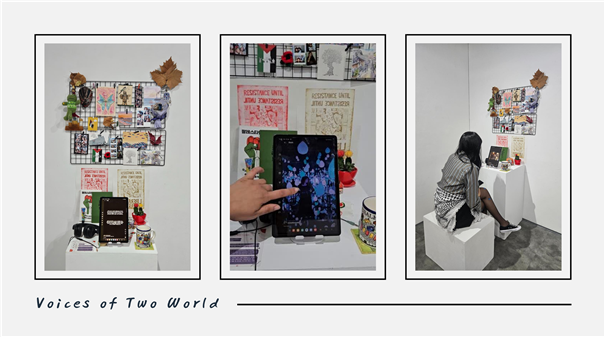
이 작품에서는 제 작업실의 한 부분을 재현했습니다. 책상, 의자, 그리고 인스타그램이 켜진 아이패드를 배치했습니다. 관객은 직접 앉아 스크롤을 하며 친밀하면서도 불편한 공간에 들어오게 됩니다.
영상은 한국에서의 일상 — 식사, 웃음, 짧은 행복 — 과 가자지구에서의 참혹한 현실 — 죽임당하는 아이들, 끝없는 슬픔 — 이 번갈아 나옵니다. 이는 제 삶의 디스토피아적 이중성을 보여줍니다. 여기 있으면서도 완전히 여기 있지 않고, 거기에 있으면서도 완전히 있지 못한 상태. 기쁨과 슬픔, 망명과 소속감이 끝없는 스크롤 속에 공존합니다.
생명의 나무 (Tree of Life)
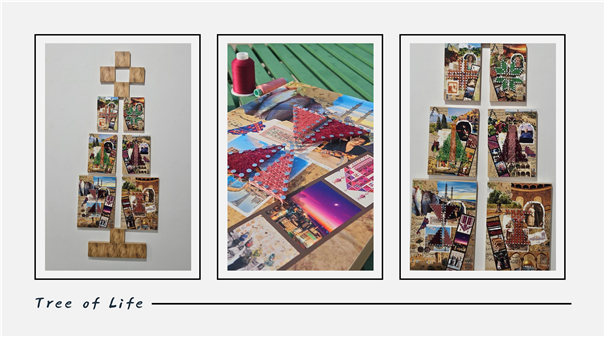
오늘날 “팔레스타인”이라는 단어를 들으면 많은 사람들은 죽음, 파괴, 상실의 이미지를 떠올립니다. 물론 그 현실을 외면할 수는 없지만, 이 땅의 놀라운 아름다움과 활기찬 문화를 가려서는 안 됩니다.
생명의 나무 작품은 팔레스타인 자수 문양 중 하나인 ‘생명의 나무’를 시각적으로 구현했습니다. 크기가 다른 나무 패널들을 배열해 하이파, 야파, 헤브론, 예루살렘, 가자, 베들레헴 같은 도시들을 나타냈습니다. 각 패널에는 건축물, 전통 음식, 동식물, 공예, 역사적 장소, 여성 예술가들의 사진 등을 담아냈습니다.
또한 각 도시마다 다른 자수 문양을 실로 표현했습니다. 이렇게 생명의 나무는 팔레스타인의 다양성과 풍부한 문화를 축하하며, 그 속에서 살아 있는 저항과 아름다움을 보여줍니다.
묶인 목소리 (Chained Voices)

이 사진 시리즈는 나크바의 날부터 이야기를 시작합니다. 저는 ‘귀환의 열쇠’를 들고 있는데, 이는 집으로 돌아가고자 하는 갈망의 상징입니다. 거울 속 제 모습을 찍은 사진은 팔레스타인이 종종 특정한 서사나 선전에 의해 왜곡되어 비춰지는 현실을 보여줍니다.
“사람 없는 땅에, 땅 없는 사람”이라는 거짓된 구호 속에서 우리는 정체성을 끊임없이 지켜야 했습니다. 우리는 테러리스트도, 반유대주의자도 아닙니다. 이것이 우리가 계속해서 방어해야 하는 진실입니다.
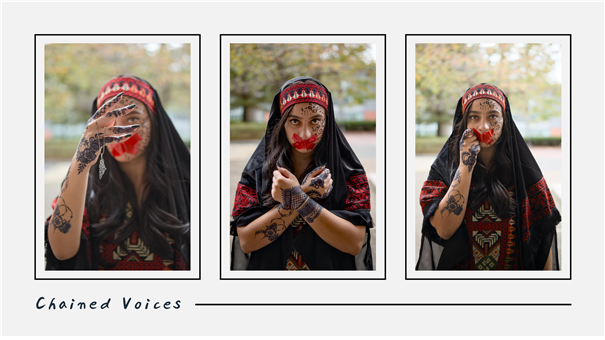
시리즈 후반부에는 제 입에서 테이프를 떼어내는 장면이 담겨 있습니다. 이는 제 목소리를 되찾으려는 결연한 의지를 보여줍니다. 억압 속에서도 다시 말하고, 다시 살아 있음을 증명하는 시각적 여정입니다.
그녀 (Her)
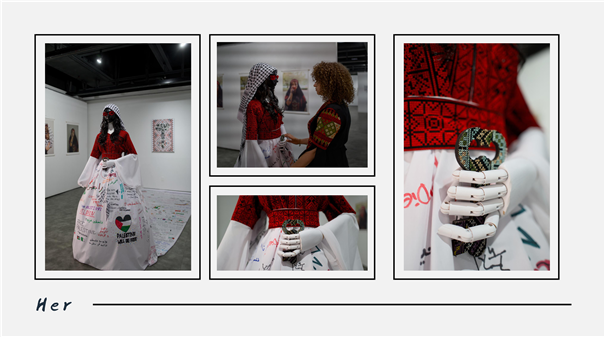
또 다른 설치 작품 그녀는 한국에서의 시위에서 사용된 10미터 길이의 천을 활용했습니다. 이 천에는 다양한 언어로 팔레스타인 여성들에게 보내는 연대의 메시지가 적혀 있습니다.
이 천은 여성의 날 행진에서도 함께 걸어갔습니다. 저는 그것을 마네킹에 감싸, 단순한 글자가 아닌 살아 있는 존재로, 집단적 목소리로 재탄생시키고자 했습니다.
그녀는 저항이 혼자가 아니라는 것을 보여줍니다. 저항은 연결되어 있고, 세계적이며, 무엇보다 인간적입니다.
차별의 벽 (Discrimination Wall)

전시의 또 다른 핵심 작품은 팔레스타인 분리 장벽을 모티브로 한 시멘트 설치물입니다. 이 벽은 단순한 물리적 장벽이 아니라, 침묵을 거부하는 목소리들의 캔버스입니다.
벽 위에는 순교자들의 초상화, 저항의 글귀, 그리고 팔레스타인 예술가 타키 사바틴과 뱅크시 같은 국제 예술가들의 작품들이 그려져 있습니다. 수십 년 동안 이 벽은 고통과 저항, 희망의 야외 갤러리가 되었습니다.
저는 제 작품 속에서 이 벽을 두 동강 내어 깨뜨렸습니다. 언젠가 벽이 무너지고, 팔레스타인 사람들이 빼앗긴 땅으로 돌아가며, 삶과 꿈을 가두는 경계가 사라질 미래를 상상하기 위해서입니다.
이 작품은 장벽의 무게를 드러내는 동시에, 자유를 갈망하고 저항하며 상상하는 인간의 의지를 보여줍니다.
클로징

저항은 희망을 낳는다는 전시의 제목이자, 세대를 거쳐 팔레스타인 여성들이 지켜온 진실입니다. 기억과 예술, 그리고 저항을 통해 그들은 가장 어두운 순간에도 희망이 피어날 수 있음을 우리에게 가르쳐줍니다.
저에게 예술은 그 유산을 이어가는 방법입니다. 망각에 맞서고, 과거와 현재를 잇고, 더 자유로운 미래를 상상하게 하는 길입니다.
마지막으로 이렇게 전하고 싶습니다. 벽은 무너질 수 있고, 침묵은 깨어질 수 있으며, 우리가 함께 저항한다면 희망은 언제나 다시 피어날 것입니다.
종합보고 https://yunheepathos.tistory.com/2717
[청년·전문가 평화 ROUND TABLE] 국제 분쟁·갈등과 청년들의 삶
분쟁과 갈등이 청년들의 삶에 미치는 영향을 알아보고 이를 극복하기 위한 국제사회 청년들의 협력 방안을 모색하는 [청년·전문가 평화 ROUND TABLE]을 진행했습니다.(2025년 9월 17일(수) 14:00~18:00,
yunheepathos.tistory.com
Defiance Breeds Hope:
Art, Resistance, and the Collective Narratives of Palestinian Women
Exploringmemory,identity,andhopeacrossgenerations
Opening
Hello everyone, my name is Rena Khatib. It’s an honor to be here today, speaking about hope and resistance through art.
When we talk about international conflicts, we often think of statistics, politics, and violence. But behind these are the lived experiences of people — especially young people and women — who continue to find ways to survive, to resist, and to create hope.
In Palestine, women have always stood at the frontlines of this struggle for life and dignity. They were not only mothers and caretakers, but also farmers, educators, freedom fighters, and cultural keepers. During the Nakba in 1948, when over 700,000 Palestinians were displaced, women carried the keys of their homes, embroidered stories into their dresses, and preserved memory through oral storytelling. These small acts of preservation are acts of resistance. They ensured that our identity was not erased, and that hope could be passed down to the next generation.
For me as a young Palestinian, this history is not just the past — it is a living inheritance. And I believe that art is one of the most powerful ways we can carry this inheritance forward. Art is memory, it is resistance, and a way to connect generations and to imagine beyond oppression.
Exhibition
My exhibition Defiance Breeds Hope is dedicated to Palestinian women. It weaves together memory, identity, and hope — not just to preserve the past, but to inspire new generations to continue resisting and creating.
Lady of the land
One of the central works in my exhibition is a painting called The Lady of the Land. She wears the traditional Bethlehem thobe, richly embroidered. But her face is absent. This facelessness is intentional: she is not one woman, but all women. She embodies the mothers, the grandmothers, the daughters, and the sisters who carried memory across generations
Her facelessness also speaks to the countless unnamed women who shaped our survival yet were never recognized in history books. She is at once sorrowful, carrying the weight of the Nakba, but also luminous — a keeper of traditions and a symbol of continuity.”
Palestinian women used embroidery as a living archive. Through patterns and colors, they documented the flowers, the animals, and the landscapes of each city and village. Each stitch carries a geography, a story, and a memory. Wearing the thobe itself becomes an act of resistance against erasure.
Also Behind her I painted the old houses from which families were displaced during the Nakba. They stand as silent witnesses. And at the bottom of the canvas, keys hang. These are the keys to those stolen houses, the keys that women still carry until this day. They are not just objects, but symbols of a promise — that one day the door will open again.
Veils of Personas
After showing The Lady of the Land, many people asked me: “Why doesn’t she have a face? What is her expression — is she happy, sad, or angry?
Thosequestionsledmetothinkaboutmasks.Whydowomencovertheirfaces,orfeeltheneedtohidetheiridentity?
For Palestinian women activists, masks are often survival:
Protection from being identified and arrested.
Protection from tear gas.
Protection from stereotypes — because women at protests are often treated as weak, when in truth, they play a vital role in resistance.
But masks are also metaphorical. Women wear masks to conform to society’s expectations, to survive within culture, or even to frighten enemies.
I created a series of masks: one painted with embroidery motifs, another made of cement to reflect burden and strength, and another inspired by olive trees, symbolizing rootedness in the land. Together, these masks show the many roles women take on to survive, resist, and endure.
Voices of Two Worlds
In this artwork I recreated a part of my studio — a table, a chair, and an iPad open to my Instagram. Viewers are invited to sit and scroll, entering a space that feels both intimate and unsettling. The videos shift between everyday life in Korea — meals, laughter, and fleeting joys — and news from Gaza, where children are killed and grief never ends. This juxtaposition captures the dystopian duality of my life: I am here, but not fully here; I am there, but not really there. Joy and sorrow, exile and belonging coexist in one endless scroll.
Tree of life
When people hear the word "Palestine" now what often comes to their mind are images of killing, destruction, and loss. While these realities cannot and should not be ignored, they overlook the remarkable beauty and vibrant culture that characterize this land. “Tree of Life” aims to serve as a reminder of the profound love we have for our land “Palestine” and its heritage.
The artwork consists of different-sized wooden canvases arranged to create a visual representation of the Tree of Life embroidery pattern in Palestine. Each canvas showcases a distinct city—such as Haifa, Yaffa, Hebron, Jerusalem, Gaza, and Bethlehem—depicting the unique elements that define each city. This includes iconic buildings, traditional foods, local wildlife, flowers, crafts, historical sites, and photos of prominent Palestinian women artists.
To further encapsulate the distinctiveness of each city, I incorporated string art in various embroidery patterns, as these designs differ from one locale to another. “Tree of Life” celebrates the rich diversity of Palestinian culture, inviting viewers to appreciate the resilience and beauty that flourish within these cities.
Chained voices
“Chained voices” is a powerful series of photographs that narrate a story, beginning with Nakba Day, where I hold the key of return—a symbol of our longing for home. One photograph captures my reflection in a mirror, illustrating how Palestinians are often mirrored through specific narratives and propaganda. This image confronts the stereotypes imposed upon us, such as the idea of "a land without people for a people without a land," emphasizing our struggle to assert our identity amidst constant misrepresentation. We are not terrorists; we are not anti-Semitic; these are the truths we continuously defend.
As the series progresses, I capture the moment of removing tape from my mouth, signifying my determination to reclaim my voice, despite the forces that seek to silence me. This visual journey circles back to a theme of resilience and the unwavering spirit of resistance.
Her
Another installation is called.
It features a mannequin draped in a 10-meter-long fabric covered in solidarity messages, written during protests here in Korea. People from many backgrounds — in different languages — wrote or drew their support for Palestine, especially for Palestinian women.
This fabric had been carried through the streets during the women’s day march. By wrapping it around the mannequin, I wanted to transform those words into a living presence, a collective voice against oppression.
embodies our interconnectedness — the reminder that resistance is not solitary. It is shared, global, and deeply human.
Discrimination wall
Another key piece in my exhibition is a cement installation referencing the separation wall in Palestine. The wall is not only a physical barrier, but also a canvas for voices that refuse silence. On its surface, I layered graffiti, stickers, and posters, echoing what exists on the actual wall — portraits of martyrs, words of resistance, and powerful artworks created by both Palestinian artists like ,andinternationalartistssuchas.
For decades, the wall has become an open-air gallery of grief, defiance, and hope — where art transforms oppression into testimony. By cracking my version of the wall in half, I envisioned the future I long for: the wall broken, Palestinians returning to their stolen lands, and the dissolution of borders that confine lives and dreams.
This work speaks to both the weight of barriers and the unbreakable human urge to create, resist, and imagine freedom.
Closing
Defiance Breeds Hope is not only the title of my exhibition, but a truth carried by generations of Palestinian women. Through memory, art, and resistance, they teach us that even in the darkest times, hope can bloom.
For me, art is a way of carrying that legacy forward — resisting forgetting, connecting past to present, and imagining a freer future.
So I leave you with this thought: walls can be cracked, silence can be broken, and through our collective defiance, hope will always find a way to bloom.


